What Should Buyers Include in a Kids Accessories Product Brief?
September 28, 2026
A product idea is easier to develop when the buyer and manufacturer can picture the same finished item. “A pink hair clip for girls” leaves many decisions open: How large should it be? What kind of clip should it use? Is the decoration printed, sewn, or attached? How will it be packed for sale?
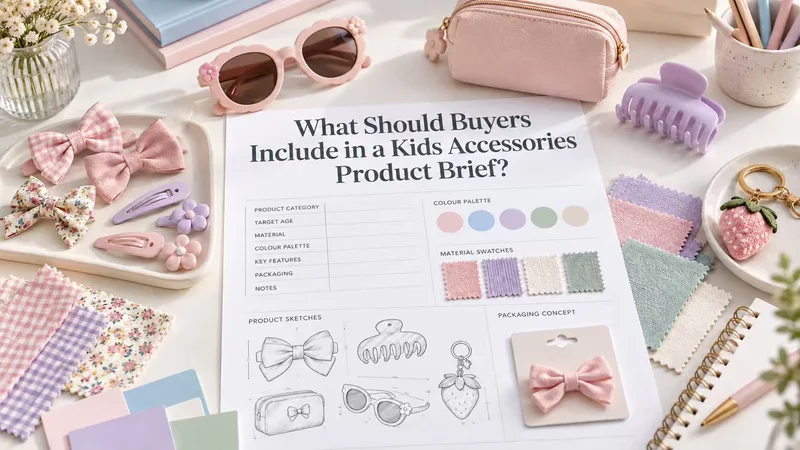
A kids accessories product brief answers those questions before sampling begins. It does not have to be a formal document. A short description, reference images, and a few clear specifications can give a manufacturer a useful starting point. For brands, wholesalers, and retailers, the following information helps turn an idea into a product that fits their market.
1. Product concept and intended customer
Start with what you want to make and who will buy it. Name the product category, intended age group, and sales channel. A hair accessory designed for an everyday retail range may need a different look and package from one developed for a seasonal gift program.
It also helps to describe the role of the item within your range. Is it a single product, part of a coordinated collection, or an accessory to be sold with another item? If you are planning matching hair clips, a pouch, and a keychain, mention the collection at the start so the designs can be considered together.
2. Design references and brand direction
Reference images are useful, but explain what you like about each one. One image might show the shape you want, while another shows the color palette or packaging style. This prevents a reference from being mistaken for a request to copy every detail.
Include your brand colors, logo files, preferred artwork style, and any details you want to avoid. For private label products, specify where your branding should appear: on the product, a sewn label, a hangtag, or the retail package.
If the design uses licensed characters, identify the property and provide the approved artwork and brand guidelines available for the project. The manufacturer will also need to understand the applicable approval process before finalizing designs and packaging. COOLS develops both private label and licensed accessories, with customization across products and packaging.
3. Product specifications
Describe the physical item as precisely as you can. Depending on the category, useful details include:
| Product | Details to specify |
| Hair clips and headbands | Size, base type, fabric or plastic, decorative pieces, attachment method |
| Bags and pouches | Dimensions, outer material, lining, closure, strap or handle, compartments |
| Kids sunglasses | Frame shape and color, lens appearance, decorative details, case or bag |
| Keychains and charms | Overall size, materials, filling or finish, ring and clip type |
| Gift sets | Exact contents, quantities, arrangement, and whether items may be ordered separately |
If a specification is undecided, say so. “Please suggest a suitable material” gives the development team room to propose options. If a detail is essential, mark it clearly. For example: “The hearts must be sewn appliqués, not printed artwork.”
4. Materials, finish, and quality expectations
Tell the supplier how the item should look and feel in use. Words such as soft, glossy, lightweight, or structured can help, especially when paired with a reference sample. For decorative items, specify whether you want embroidery, printing, resin charms, plush details, or another finish.
Identify any features that matter most to your customer, such as a smooth zipper, a secure clip, or neatly attached decorations. These points give both sides something concrete to check during sampling. You can also state which details are flexible if a different construction would achieve a similar result within your target cost.
5. Destination market and testing requirements
Children’s products may have different requirements depending on where and how they will be sold. Include the destination country or region, intended age group, and any testing, labeling, or documentation requirements supplied by your buyer or retail channel.
Share these requirements early, before materials and components are finalized. If you are unsure which requirements apply, flag that as an open question for review with your compliance team and supplier. Avoid treating a visual sample approval as confirmation that a product meets the requirements of its destination market.
6. Packaging and retail presentation
Packaging affects how the product is displayed, protected, and shipped. Tell the manufacturer whether you need a backing card, hangtag, window box, pouch, or another format. Include any barcode, label, language, artwork, or packing instructions you already have.
For a set, explain how the items should sit inside the package. For a collection, indicate whether every item should share a recognizable packaging style. COOLS offers customization across branding and retail packaging, and packaging needs are among the details it asks buyers to share when discussing a project.
7. Quantity, target price, and timeline
A useful brief includes the estimated order quantity per design and color, not just the total for the collection. Add your target price range if you have one, along with the expected delivery window and any launch date.
These figures help the manufacturer suggest materials, construction, and packaging that fit the project. They also make it easier to identify early whether a design may need adjustment. If quantities are still under review, provide a realistic range for the first order and note any expected repeat orders.
8. Sample approval and decision makers
Finally, explain how your team will review the product. Who will approve the design, physical sample, artwork, and packaging? Will feedback come from one contact or several departments? List any specific points that must be checked before production, such as color matching, logo placement, dimensions, and set contents.
Keeping these decisions in the brief creates a shared reference when samples are revised. It also helps prevent an approved visual detail from being changed unintentionally later in development.
A simple brief buyers can send
You do not need to have every answer before making an inquiry. This short format is enough to start a productive discussion:
- Product: Two-piece girls’ hair clip set
- Customer and market: Ages 6–10; retail sale in [destination market]
- Design: Strawberry theme in pink and red; reference images attached
- Construction: Two snap clips with securely attached decorative pieces
- Branding: Our logo on the backing card; artwork file to follow
- Packaging: One set per hanging card, with barcode space
- Quantity: Estimated [quantity] sets for the first order
- Target price and delivery: [Range] and [desired date]
- Open questions: Please suggest suitable materials and decoration methods
A good product brief separates confirmed requirements from details open to development. That gives a manufacturer enough direction to prepare relevant ideas, samples, and quotations while leaving room to solve practical design questions together.
At COOLS Accessories, we work with buyers on custom children’s accessories across hair accessories, bags, charms, sunglasses, and other categories, from concept and sampling through packaging and production. If you are planning a new wholesale or private label range, send us your brief—even if it begins with a sketch and a few reference images.