How Can Brands Develop a Custom Kids Accessories Collection From Idea to Production?
September 24, 2026
Developing a Custom Kids Accessories collection requires a structured process from concept planning to final production. A successful project starts with a clear target age, product function, style direction, and commercial objective. The development team then converts those requirements into product sketches, material selections, prototypes, samples, testing plans, packaging, and production specifications. For brands, retailers, and distributors, the key is to connect creative design with manufacturing feasibility from the beginning.
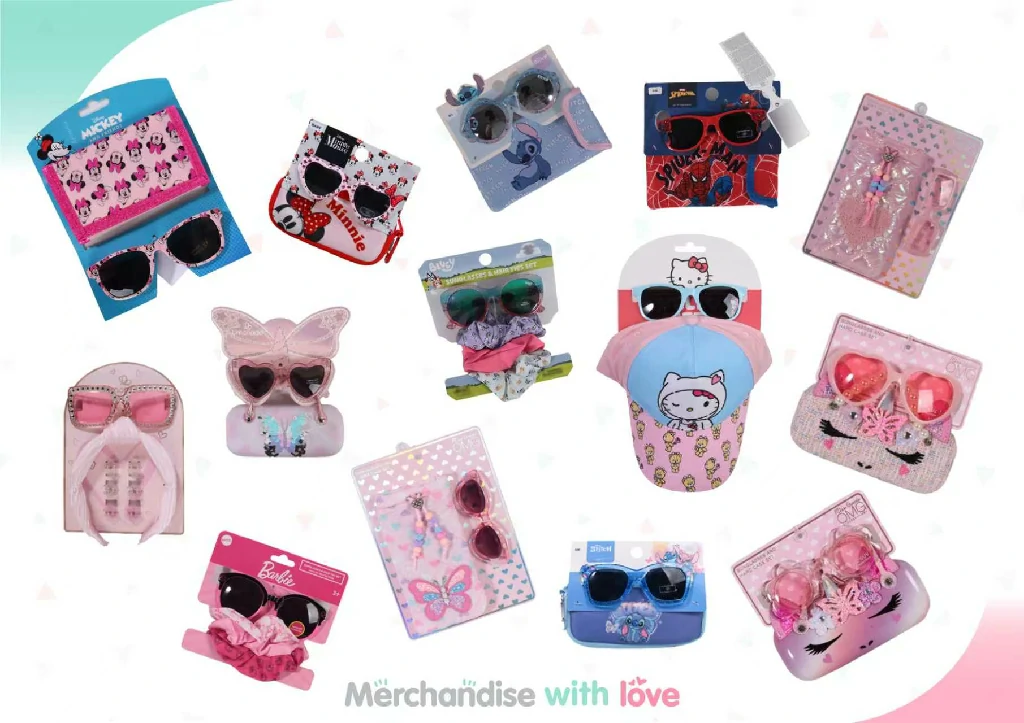
Kids accessories often include hair clips, headbands, bags, jewelry, sunglasses, hats, beauty accessories, and other small fashion items. Each category has different construction and safety considerations. A product intended for young children may also face different requirements from one designed for older children.
For example, a retailer may want to launch a seasonal collection featuring colorful hair clips, mini bags, bracelets, and sunglasses. The concept may look simple at the design stage. However, the production team still needs to evaluate component size, materials, attachment methods, packaging, color consistency, labeling, and testing requirements.
The development model also depends on whether the project uses OEM Kids Accessories or ODM Kids Accessories. OEM development usually starts with the buyer’s specifications, drawings, samples, or brand requirements. ODM development can begin with an existing supplier concept that the buyer adapts to its target market.
A clear development process reduces unnecessary sampling and helps buyers control cost, quality, lead time, and production risk. This guide explains each stage and shows how buyers can move a kids accessories concept toward a production-ready collection.
How Should Brands Define a Kids Accessories Collection Before Development?
The first stage is not choosing a factory or requesting a quotation. It is defining what the collection needs to achieve.
A clear product brief gives designers and manufacturers a common reference. It also prevents the development process from becoming a sequence of disconnected samples.
Start With the Target Age Group
Age affects product design, dimensions, materials, packaging, and applicable safety requirements.
A collection for toddlers may require different considerations from accessories designed for children aged eight to twelve.
The target age should therefore appear in the initial product brief.
Consider these questions:
- Who will use the product?
- What age range does the collection target?
- Will the product be worn, carried, or used for play?
- Does the product contain detachable components?
- How frequently will children handle the product?
- Will adults also purchase or use the product?
These questions help establish the technical direction before sampling begins.
The U.S. Consumer Product Safety Commission defines children’s products based on their intended use by children aged 12 or younger. Product classification affects which safety requirements may apply.
Define the Collection Theme
A collection needs a consistent design language.
The theme may come from a seasonal fashion direction, a brand identity, a color story, or a retail campaign.
For example, a spring collection could use pastel colors, floral shapes, lightweight materials, and playful packaging. A back-to-school collection might use practical hair accessories, small bags, and simple jewelry.
The theme should guide product development without making every item identical.
A collection can include several categories while maintaining common visual elements.
Define the Product Mix
Buyers should decide which products belong in the first production group.
A typical collection might include:
- Hair clips
- Headbands
- Kids bracelets
- Fashion necklaces
- Mini bags
- Hats
- Sunglasses
- Kids beauty accessories
The product mix affects development workload, sampling cost, packaging, and production planning.
It also helps manufacturers understand the expected volume across different SKUs.
Define Commercial Requirements
Design teams often focus on appearance first.
B2B buyers also need to define commercial requirements early.
Important information includes target price, estimated order quantity, target market, launch date, packaging requirements, and expected reorder potential.
For example, a retailer may accept a higher unit cost for a limited seasonal collection. A mass-market distributor may need tighter cost control because the expected order volume is much higher.
The same product concept may therefore require different materials or construction methods for different buyers.
How Do OEM and ODM Kids Accessories Development Processes Differ?
OEM and ODM represent two different starting points for product development.
Understanding the difference helps buyers select an appropriate development approach.
What Is OEM Kids Accessories Development?
OEM Kids Accessories development starts with the buyer’s specifications.
The buyer may provide:
- Product drawings
- Reference samples
- Brand guidelines
- Material requirements
- Color references
- Logo files
- Packaging specifications
- Target dimensions
The supplier then develops the product according to those requirements.
For example, a children’s fashion brand may provide a reference hair clip and request a new shape, color combination, logo treatment, and packaging format.
The manufacturer needs to convert the concept into a manufacturable product.
That process may involve material sourcing, structural adjustments, prototype development, sample approval, and production preparation.
What Is ODM Kids Accessories Development?
ODM Kids Accessories development starts from a supplier’s existing design capabilities or product concepts.
The buyer may select an existing design and request changes.
Those changes can include:
- Color
- Material
- Size
- Pattern
- Logo
- Decorative elements
- Packaging
- Product combinations
ODM can reduce the initial design workload when the buyer wants to build a collection quickly.
However, customization still requires technical review.
A product that looks suitable in a catalog may require changes to meet the buyer’s target price, age group, packaging requirements, or market regulations.
When Should Buyers Use Each Model?
The right development model depends on the buyer’s resources and product strategy.
OEM often suits brands with established product specifications or proprietary designs.
ODM may suit retailers and distributors that need market-ready concepts with controlled customization.
Some projects combine both approaches.
A buyer may use an existing supplier structure while introducing its own colors, branding, materials, and packaging.
For brands seeking a more direct route from concept to production, the Custom Kids Accessories development process can connect product specifications with sampling and manufacturing requirements.
What Are the Key Steps From Product Idea to Production Sample?
Once the product brief is ready, the project moves into technical development.
This stage converts a design concept into something that can be evaluated physically.
Step 1: Submit the Development Brief
A useful development brief should contain enough information for the supplier to understand the intended product.
At minimum, provide the product type, target age, reference images, dimensions, materials, colors, logo requirements, estimated quantity, and target price.
More detailed briefs reduce clarification cycles.
If the buyer has a physical reference sample, photographs alone may not communicate every detail. Sending the sample can provide additional information about dimensions, construction, finish, and component relationships.
Step 2: Evaluate Materials and Components
Material selection affects appearance, durability, weight, cost, and production feasibility.
Kids accessories may use textiles, plastic, metal, silicone, synthetic leather, acrylic, glass, wood, or combinations of several materials.
Each material should be considered within the intended product application.
For example, a decorative metal component may look suitable for a bracelet. However, the supplier still needs to evaluate its surface finish, attachment method, dimensions, and applicable testing requirements.
Material selection should happen before finalizing the product structure.
Step 3: Develop the Prototype
The first prototype provides a physical reference.
It allows the development team to check dimensions, appearance, construction, and functionality.
At this stage, some elements may still change.
A hair accessory may need a different clasp. A mini bag may require a stronger strap attachment. A bracelet may need an adjusted closure.
The purpose of the first sample is not simply visual approval.
It should also reveal manufacturing issues that drawings may not show.
Step 4: Review the Sample
The buyer should evaluate the sample against the original brief.
A structured review can cover:
| Evaluation area | Questions to check |
|---|---|
| Dimensions | Does the size match the specification? |
| Materials | Are the selected materials suitable? |
| Construction | Can the assembly withstand normal use? |
| Appearance | Are color, shape, and finish correct? |
| Branding | Is the logo placement accurate? |
| Function | Does the accessory work as intended? |
| Packaging | Does the package protect and present the product? |
| Cost | Does the sample remain within the target price? |
Table 1. Key Sample Review Points for Custom Kids Accessories Development
A written approval process helps prevent misunderstandings later.
If several changes are required, combine them into one revision whenever possible.
Repeated small changes can increase sample time and create unnecessary development costs.
Step 5: Produce a Revised Sample
The supplier updates the product based on the buyer’s feedback.
The second sample should reflect the agreed changes.
For more complex products, additional rounds may be necessary.
However, excessive sampling often indicates that the original brief lacked sufficient technical information.
A detailed product specification can reduce this problem.
Step 6: Confirm the Pre-Production Sample
The final approved sample becomes the physical reference for production.
The supplier should align production specifications with the approved sample.
This stage should also confirm materials, colors, dimensions, packaging, labeling, and production quantities.
The approved sample provides a reference for later quality inspection.
How Should Safety and Compliance Be Built Into Kids Accessories Development?
Safety should not be treated as a final inspection step.
It needs to influence product design from the beginning.
Children’s accessories may involve small components, coatings, metals, plastics, textiles, cords, magnets, and other materials. The applicable requirements depend on the product type, age group, market, and intended use.
Consider Small Components Early
Small detachable components require special attention.
The CPSC’s small parts rule applies to certain children’s products intended for children under three when small parts create choking, aspiration, or ingestion hazards. (CPSC)
This does not mean every accessory has the same testing requirement.
The product must first be classified correctly.
A development team should therefore review the target age before finalizing small decorative elements.
Review Material Requirements
Materials can create different compliance considerations.
Metal accessories may require attention to restricted substances. Coated components may require additional testing. Plastics may involve different chemical requirements depending on their composition and application.
The buyer should identify the destination market early.
A product intended for the U.S. market may require a different compliance plan from one intended for another jurisdiction.
Plan Testing Before Mass Production
Testing should not begin only after a large production batch is complete.
The final production-intent sample should be suitable for the required testing program.
The CPSC states that children’s products subject to applicable safety rules generally require third-party testing and certification. The responsible manufacturer or importer must issue a Children’s Product Certificate based on applicable requirements.
Testing requirements vary by product type, age group, material composition, and applicable regulations.
This makes compliance planning an important part of product development.
Build Traceability Into the Product
For U.S. children’s products, tracking information may need to appear on the product and packaging when practicable.
The CPSC identifies tracking labels as a common requirement for children’s products.
The exact requirements depend on the product.
Buyers should therefore confirm labeling requirements before artwork approval.
How Can Buyers Control Cost During Custom Kids Accessories Development?
Cost control should start during design rather than after production.
The most expensive changes often occur when a buyer modifies the product after tooling, packaging, or material purchasing has started.
Control the Number of Components
Every additional component can affect material cost and assembly time.
For example, adding multiple decorative elements to a hair accessory may increase assembly steps.
The design team should evaluate whether each component contributes meaningful value to the product.
Simplifying the construction can sometimes reduce cost without changing the overall appearance.
Standardize Shared Components
A collection can share certain components across multiple SKUs.
Examples include:
- Common clasps
- Standard packaging formats
- Shared metal components
- Common fabric bases
- Standard logo plates
This approach can simplify purchasing and production.
It can also reduce the number of component specifications that the factory must manage.
Balance Customization and MOQ
Customization usually creates additional development and production requirements.
Low-volume custom products may require higher unit costs.
Buyers should therefore consider which elements truly need customization.
A practical approach is to customize the design language while using established component structures where possible.
Consider Packaging Early
Packaging can affect both product cost and shipping efficiency.
A bulky package may increase carton volume even if the accessory itself remains small.
For wholesale programs, packaging should therefore be evaluated together with the product.
This is especially relevant for kids fashion accessories wholesale projects with many SKUs.
A consistent packaging system can also simplify retail presentation and carton planning.
Compare Prototype Cost With Production Cost
The first sample does not always represent the final production cost.
Prototype work may require manual assembly or small-volume material purchasing.
The production quotation should reflect the planned manufacturing process and confirmed order quantity.
Buyers should ask suppliers to explain major cost differences when the production quotation changes significantly from the sample stage.
How Should Brands Prepare a Collection for Mass Production?
After sample approval, the project moves from development into production preparation.
This transition requires accurate documentation.
Create a Product Specification
Each SKU should have a clear specification.
Useful information includes:
- Product dimensions
- Material composition
- Component details
- Color references
- Logo specifications
- Surface finish
- Assembly requirements
- Packaging method
- Label information
- Quantity
- Quality requirements
The specification should match the approved sample.
Confirm the Production Quantity
Production planning depends on confirmed quantities by SKU.
A collection with 30 SKUs may have very different quantities across products.
For example, a retailer may order 5,000 units of a best-selling hair clip but only 1,500 units of a specialized accessory.
Production scheduling should account for those differences.
Confirm Packaging and Carton Requirements
Packaging artwork should receive approval before mass production.
Check product labels, barcodes, warning information, language requirements, and carton markings where applicable.
Carton dimensions also affect logistics costs.
For international buyers, packaging should therefore be reviewed from both compliance and shipping perspectives.
Establish Quality Standards
Quality standards should define measurable requirements.
Instead of writing “good quality,” specify what the factory should check.
Examples include:
- Color tolerance
- Logo position
- Product dimensions
- Stitching requirements
- Surface finish
- Component attachment
- Packaging condition
Clear standards give inspectors an objective reference.
How Can a Buyer Manage Quality During Production?
Quality control should cover the entire production cycle.
Waiting until the final shipment to identify defects creates fewer options for correction.
Pre-Production Inspection
Before mass production begins, confirm that production materials match the approved specifications.
Check the selected materials, colors, components, packaging, and production sample.
This stage helps prevent incorrect materials from entering the production line.
During-Production Inspection
A mid-production inspection can identify recurring defects.
For example, if a particular hair clip has an attachment problem across multiple units, early detection allows the factory to correct the process.
This is more efficient than discovering the same issue after production is complete.
Final Inspection
The final inspection checks the finished goods against the approved requirements.
The inspection scope may include:
- Quantity
- Appearance
- Dimensions
- Function
- Packaging
- Labeling
- Component attachment
- Carton condition
The exact inspection method should reflect the product category and buyer’s quality standard.
What Should Buyers Ask an OEM Kids Accessories Supplier Before Production?
Supplier selection should focus on manufacturing capability rather than catalog size alone.
A suitable supplier needs to understand the product category, development process, compliance requirements, and production expectations.
Product Development Capability
Ask whether the supplier can develop products from:
- Sketches
- CAD drawings
- Reference samples
- Images
- Product specifications
Also ask how the supplier manages sample revisions.
A clear revision process can reduce unnecessary communication delays.
Material and Component Sourcing
Ask whether the supplier sources components directly or relies on external vendors.
This matters when a collection contains many specialized components.
The supplier should also explain how it manages material consistency across production batches.
Production Capacity
Capacity should match the expected order volume.
A supplier may handle small development orders but have limited capacity for large seasonal programs.
Ask about normal production lead times, peak-season capacity, and production scheduling.
Quality Control
Ask how the supplier handles incoming material inspection, production inspection, and final inspection.
The buyer should also clarify whether inspection reports can be provided.
Compliance Support
For children’s products, ask what documentation and testing support the supplier can provide.
The CPSC maintains a list of accepted laboratories and explains that testing requirements depend on the applicable children’s product rules.
An experienced supplier should understand that compliance depends on the actual product.
It should not treat one generic test report as universal evidence for every SKU.
Communication and Project Management
A collection may involve dozens of product specifications.
The supplier should have a clear process for managing samples, approvals, changes, production, inspection, and shipment.
For international buyers, communication quality can directly affect development speed.
An OEM kids accessories supplier with experience across product development and production can help coordinate these stages through one workflow.
FAQ About Developing Custom Kids Accessories
How long does it take to develop a custom kids accessories collection?
The timeline depends on the number of SKUs, product complexity, materials, tooling, sample revisions, and testing requirements.
Simple accessories may require fewer development stages.
Products with custom molds or specialized components usually need more time.
The buyer should establish the target launch date before development begins.
What is the difference between OEM and ODM kids accessories?
OEM development starts from buyer-defined specifications or designs.
ODM development generally starts from supplier-developed products or concepts.
OEM offers more direct control over the product specification.
ODM can reduce the initial design workload when an existing product structure suits the target market.
Can one supplier develop multiple kids accessory categories?
Some suppliers support multiple categories, while others specialize in one product type.
A multi-category project requires sufficient sourcing and production coordination capability.
Buyers should verify actual experience rather than assuming a supplier can produce every accessory category.
What information should I provide for a custom accessories quotation?
Provide the product type, reference images or samples, target age, materials, dimensions, colors, logo requirements, packaging, estimated quantity, destination market, and target price.
More information usually produces a more useful quotation.
Are children’s accessories subject to product safety testing?
Some children’s products are subject to mandatory safety requirements and third-party testing.
The applicable requirements depend on product classification, intended age, materials, and destination market.
For U.S. products, buyers should review current CPSC requirements before production.
Can I customize colors and materials for existing ODM products?
In many ODM projects, buyers can request changes to colors, materials, logos, dimensions, components, or packaging.
The supplier should confirm whether each change affects tooling, MOQ, cost, or testing.
What is MOQ in custom kids accessories production?
MOQ means minimum order quantity.
The actual MOQ depends on the product, materials, tooling, production process, and supplier.
Custom components often require higher quantities because the factory needs to purchase or produce them in batches.
How should I approve the final sample?
Compare the sample with the original specification.
Check dimensions, materials, colors, construction, logo placement, packaging, and functional details.
Once approved, the sample should become the production reference.
Can custom kids accessories use private labeling?
Yes, many B2B accessory projects use private labeling.
Branding can include logos, labels, packaging, hangtags, printed patterns, or custom components.
The exact options depend on the product structure and production process.
What should I check before placing a bulk order?
Confirm the final sample, specifications, quantity, packaging, testing requirements, labeling, price, lead time, payment terms, and inspection requirements.
Written confirmation reduces ambiguity before production starts.
References
U.S. Consumer Product Safety Commission – Children’s Products
U.S. Consumer Product Safety Commission – Children’s Product Certificate
U.S. Consumer Product Safety Commission – Third-Party Testing Guidance
U.S. Consumer Product Safety Commission – Small Parts and Choking Hazard Labeling
U.S. Consumer Product Safety Commission – Labeling Requirements Overview
COOLS is a custom kids accessories supplier serving brands, retailers, distributors, and other B2B buyers. The company supports product development from concept and reference samples through customization, sampling, production, quality control, and packaging. Its capabilities cover Custom Kids Accessories, OEM Kids Accessories, ODM Kids Accessories, kids beauty accessories, and other children’s fashion accessory categories. By combining product development with manufacturing coordination, COOLS helps buyers turn collection concepts into production-ready products for their target markets.