
When Oversized Bows Need Smarter Product Design
October 26, 2026
Oversized bows give kids’ hair accessories a distinctive look. A wide ribbon, rounded loops or flowing tails can turn a simple hair clip into the focal point of an outfit. For retailers and brands, they also offer space to showcase signature colors, playful patterns and seasonal themes.
However, developing an oversized bow involves more than enlarging a smaller design. As the bow grows, its proportions, fabric behavior and attachment need to work together. A successful product should look balanced, hold its intended shape and remain practical to wear, pack and display.
For wholesale buyers, these details deserve attention before a design moves into production.
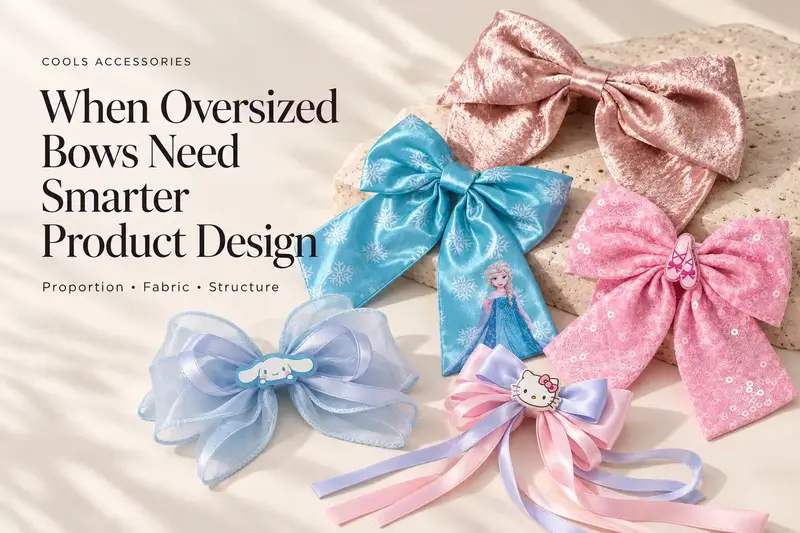
Start with Proportion, Not Just Width
Two bows with the same overall width can look very different. Large loops with a narrow center create a different silhouette from flatter loops with a broad center wrap. Long tails add movement, while short tails create a more compact appearance.
The intended hairstyle also matters. A bow designed for the back of a ponytail may need different proportions from one worn at the side of the head.
When reviewing a sample, consider the relationship between:
- The width and height of the loops
- The size of the center wrap
- The length and angle of the tails
- The bow’s position relative to the clip
Evaluate the bow both on its own and in its intended wearing position. A design that looks balanced on a sample table may sit differently when attached to hair.
Choose Fabric for the Shape You Want
Fabric affects how an oversized bow stands, folds and moves. Selecting a material by color or surface appearance alone can leave the finished product looking different from the original concept.
Satin can provide a smooth finish and soft folds, but its structure varies with thickness and construction. Grosgrain offers a ribbed texture and can suit more defined shapes. Sheer fabrics create an airy appearance, while heavier fabrics may require a different approach to folding and support.
The useful question is: Should this bow hold a clear silhouette, or have a softer, flowing shape?
Once that direction is established, compare actual fabric samples in the intended bow size. A small swatch cannot fully show how a material will behave across a wide loop or a long tail.
Where additional support is needed, assess how it affects thickness, flexibility and overall weight.
Match the Clip to the Whole Bow
The attachment is a functional part of the design. An oversized bow can place weight beyond the edges of its clip, so clip length alone does not determine how well it will sit.
The clip’s position, opening action and connection to the bow all need to be considered together. Buyers should check whether the bow tilts forward, rotates during movement or makes the clip difficult to reach.
Review samples in the intended hairstyle and on representative hair types. A clip suitable for securing a decorative bow over an existing hair tie may behave differently when used to hold a section of hair by itself.
The product’s intended use should guide the attachment choice from the beginning.
Keep the Center and Finishing Consistent
The center wrap helps define the bow’s appearance. If it is too tight, the loops may become distorted. If it is too loose, the folds may shift and lose their intended arrangement.
Larger bows also make uneven details easier to notice. Differences in loop size, tail length or fold placement can affect the appearance of a retail assortment.
Before approving production, define the desired shape through a reference sample and clear specifications. These should cover overall dimensions, acceptable variation, center placement and the method used to finish exposed edges.
For patterned fabrics, clarify whether the design requires a particular motif position or allows variation between pieces. This is especially useful when a prominent illustration or directional print forms part of the bow’s visual appeal.
Design Packaging Around the Bow’s Volume
An oversized bow has depth as well as width. Packaging that presses heavily on its loops may leave it flattened or creased when unpacked.
The backing card, attachment points and available space should support the intended shape. Avoid pulling the bow tightly against a card simply to make the pack appear neat.
Review the product after it has spent time in its proposed individual packaging and outer carton. Check whether the loops recover naturally, whether tails develop noticeable folds and whether staff would need to reshape every piece before display.
This helps buyers assess the product as it will arrive, alongside how it looks when freshly prepared for a sample presentation.
Review the Sample as a Complete Product
A final review should bring appearance, use and packing together. Check the front, back and side views, operate the clip, assess the attachment and unpack a sample from the proposed packaging.
The aim is to confirm that the finished accessory delivers the approved look through normal handling. Catching a tilted clip, uneven fold or compressed loop at this stage gives the team an opportunity to adjust the design before bulk production.
Develop Oversized Bows with COOLS
At COOLS Accessories, we support OEM/ODM and private-label kids’ accessory projects, from design and sampling through production, quality control and shipment.
For oversized bow projects, customers can work with our team to develop coordinated fabric choices, proportions, attachment options and retail packaging based on their brand direction and product requirements.
Planning an oversized bow collection? Contact COOLS to discuss your designs, target customers and wholesale requirements.