
How Custom Kids Accessories Are Developed from Idea to Production
August 4, 2026
Introduction
Creating successful custom kids accessories requires much more than selecting attractive colors or adding fun designs. Behind every hair accessory, children’s bag, pair of sunglasses, cosmetic pouch, jewelry item, or gift set is a complete product development process involving design planning, material selection, sampling, testing, production, quality control, and packaging.
For brands, retailers, wholesalers, importers, and promotional product buyers, understanding the development process helps improve communication with manufacturers, control project costs, shorten production timelines, and create products that meet both market expectations and quality requirements.
Working with an experienced kids accessories manufacturer allows buyers to transform an initial concept into a retail-ready product. Through OEM and ODM cooperation, manufacturers can support the complete process from product design and prototype development to mass production and final packaging.
At COOLS Accessories, buyers can develop customized children’s products with professional support throughout the entire manufacturing process. As a trusted licensed kids accessories manufacturer, COOLS Accessories provides customized solutions for brands, retailers, and distributors looking to create unique accessory collections.
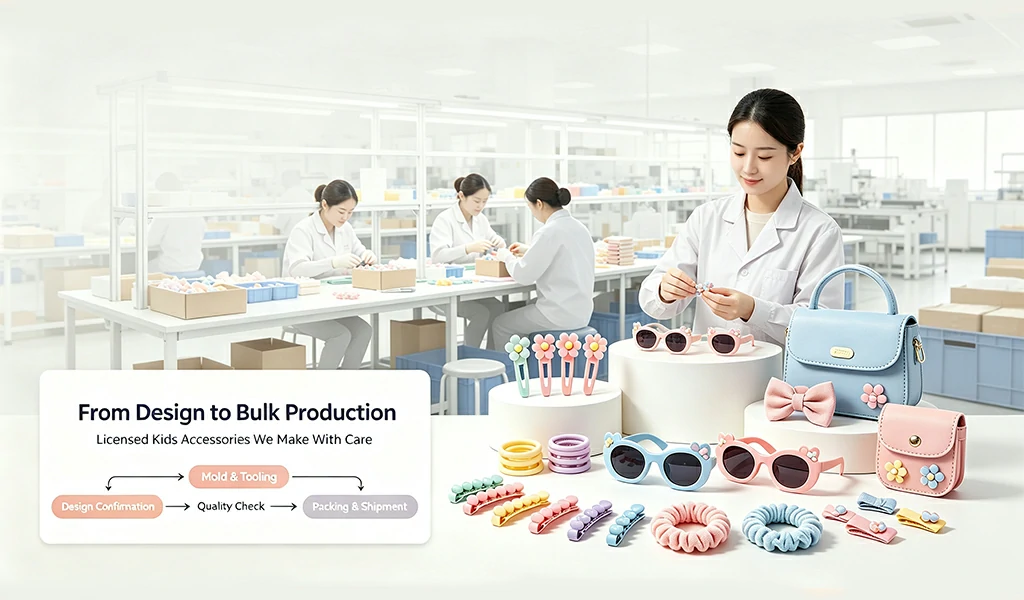
1. Defining the Product Concept
Every custom project begins with an idea. Some buyers may already have complete product designs, character licenses, reference samples, technical drawings, or artwork files. Others may only have a general concept and need professional guidance to develop the product.
At the beginning stage, buyers and manufacturers need to define the key product requirements clearly, including:
- Product category
- Target age group
- Intended retail market
- Design style and theme
- Product dimensions
- Target price range
- Order quantity
- Packaging requirements
- Expected delivery schedule
For example, a brand may want to develop a pastel-colored children’s hair accessory collection for a seasonal promotion. Another retailer may need a character-themed cosmetic pouch series or matching accessory set for a licensed product program.
The clearer the initial product brief is, the easier it becomes for the manufacturer to recommend suitable materials, production methods, decoration techniques, and packaging solutions.
A professional development process helps avoid unnecessary modifications later and creates a smoother transition from concept to production.
2. Creating the Design Direction
After the product concept is confirmed, the design development stage begins.
For OEM projects, buyers usually provide their own artwork, logos, character guidelines, product references, color requirements, or existing samples. The manufacturer then evaluates the design and provides production suggestions based on materials, structure, and manufacturing feasibility.
For ODM projects, manufacturers can assist buyers in developing product concepts based on market trends, target customers, price positioning, and retail requirements.
During the design stage, the development team may work on:
- Product shape and dimensions
- Color combinations
- Printed graphics
- Embroidery patterns
- Decorative charms
- Logo placement
- Hardware selection
- Packaging design
- Product sets and collections
A successful design needs to balance appearance, functionality, production efficiency, and cost control.
A product may look attractive in a digital design file, but some details may require adjustment before mass production. For example, a decoration may need to be resized, a material may need to be replaced, or a structure may need to be simplified to improve production consistency.
3. Selecting Suitable Materials
Material selection plays an important role in determining the appearance, durability, safety, cost, and overall performance of custom children’s accessories.
Different product categories require different material combinations. Common materials used in kids accessories include:
- Polyester
- PU leather
- Acrylic
- Resin
- Plastic
- Metal
- Plush fabric
- Satin
- Elastic materials
- PVC
- Various lining fabrics
For example:
Hair Accessories
Hair clips and hair bands may combine metal clips, plastic bases, resin decorations, ribbons, fabrics, and decorative elements.
Children’s Bags
Kids bags may use polyester, PU materials, plush fabrics, zippers, shoulder straps, and inner lining structures.
Kids Sunglasses
Children’s sunglasses may include plastic frames, acrylic lenses, printed temples, and decorative components.
Cosmetic Pouches
Cosmetic bags can include fabric materials, embroidery, sewn appliqués, zipper pulls, and customized decorations.
Jewelry and Keychains
Accessories such as bracelets, necklaces, and keychains may combine beads, acrylic charms, plush decorations, chains, and metal fittings.
The selected materials should match the intended market positioning. Lightweight materials may be suitable for daily children’s products, while premium materials may be preferred for gift collections or boutique retail products.
Market requirements should also be considered because different regions and sales channels may have different expectations regarding materials, appearance, packaging, and product standards.
4. Choosing the Decoration Technique
Decoration methods help transform a basic accessory into a unique product with stronger visual appeal.
Depending on the design requirements, manufacturers may use different decoration technologies, including:
- Screen printing
- Heat transfer printing
- All-over printing
- Embroidery
- Sewn appliqués
- Glitter decoration
- Resin charms
- Rubber or PVC decorations
- Metal charms
- Rhinestone-style details
- Woven labels
- Custom printed logos
Each decoration method creates a different appearance and affects production cost.
For example, embroidery provides a textured and durable finish for fabric products, while heat-transfer printing is suitable for detailed graphics on sunglasses or textile accessories. Resin charms can create playful three-dimensional effects for hair accessories, bags, and jewelry products.
The best decoration solution should support the product concept while maintaining production efficiency and cost effectiveness.
5. Developing the First Sample
After the product design, materials, and decoration methods are confirmed, the manufacturer begins developing the first prototype or sample.
The sample stage is one of the most important steps in the custom product development process because it allows buyers to evaluate the actual product before moving into mass production.
Instead of relying only on drawings or digital designs, buyers can check the real product appearance, materials, workmanship, and functionality.
During sample evaluation, buyers should review:
- Overall product appearance
- Product dimensions
- Color accuracy
- Material quality
- Product functions
- Logo and artwork position
- Decoration details
- Comfort and usability
- Packaging presentation
The first sample may require several adjustments before final approval. This is normal for customized products, especially for new designs.
For example:
- A decorative charm may need to be resized
- A fabric color may require adjustment
- A zipper structure may need improvement
- A product package may need stronger protection
Clear and detailed feedback helps manufacturers complete revisions efficiently and reduces unnecessary development time.
6. Confirming the Final Sample
After all required modifications are completed, the manufacturer prepares the final sample for approval.
The approved sample becomes the production reference for the entire manufacturing process. It should include all confirmed details, including:
- Product dimensions
- Material specifications
- Color references
- Decoration methods
- Logo placement
- Accessories and components
- Packaging requirements
- Product quantity per set
- Label information
- Carton packing details
Before approving the final sample, buyers should confirm every important specification clearly.
Making design changes after mass production begins may increase costs, delay delivery, and affect production efficiency. Therefore, careful sample approval is essential for successful OEM projects.
7. Preparing for Mass Production
Once the final sample is approved, the manufacturer begins preparing for mass production.
This stage involves coordinating materials, production processes, packaging, and quality requirements.
Before production starts, manufacturers usually confirm:
- Material availability
- Production quantity
- Color allocation
- Packaging quantity
- Printing or embroidery files
- Tooling or mold requirements
- Production schedule
- Inspection standards
For product collections containing multiple designs, production planning becomes especially important.
For example, a licensed children’s accessory collection may include:
- Hair accessories
- Kids bags
- Sunglasses
- Jewelry
- Keychains
- Cosmetic pouches
Although these products belong to the same collection, they may require different materials, production processes, and packaging methods.
Experienced manufacturers coordinate each production stage to ensure consistent quality and on-time delivery.
8. Starting Mass Production
Mass production usually combines automated processes and skilled manual workmanship.
Depending on the product type, production steps may include:
- Material cutting
- Molding
- Printing
- Sewing
- Embroidery
- Assembly
- Decoration
- Surface treatment
- Cleaning
- Packaging
Children’s accessories often include detailed decorative elements that require careful manual assembly.
For example:
- Hair bows may need individual shaping and attachment
- Charms need accurate positioning
- Gift sets require multiple products to be arranged properly inside packaging
During production, manufacturers follow the approved sample and specifications to maintain consistency across large quantities.
For brands and retailers ordering thousands of pieces, production stability is essential for maintaining product quality and market reputation.
9. Conducting Quality Control
Quality control should be performed throughout the entire production process rather than only after completion.
A professional inspection system usually includes three main stages:
Incoming Material Inspection
Before production begins, materials and components are checked, including:
- Fabrics
- Colors
- Prints
- Zippers
- Clips
- Charms
- Packaging materials
This helps prevent material-related issues during production.
In-Process Inspection
Products are inspected during manufacturing to identify problems early.
Inspectors may check:
- Sewing quality
- Decoration accuracy
- Assembly details
- Product structure
- Production consistency
Final Product Inspection
Before shipment, finished products are inspected for:
- Appearance
- Dimensions
- Function
- Workmanship
- Cleanliness
- Packaging quality
For children’s accessories, special attention should be given to:
- Loose components
- Sharp edges
- Weak stitching
- Printing defects
- Damaged surfaces
- Incorrect assembly
A reliable quality control system helps ensure products meet buyer expectations and market requirements.
10. Designing Retail-Ready Packaging
Packaging is not only used for product protection. It also plays an important role in retail presentation and brand image.
Different products may require different packaging solutions, including:
- Printed backing cards
- Hanging cards
- Paper boxes
- Window boxes
- Polybags
- Display boxes
- Gift boxes
- Reusable pouches
- Product combination sets
The packaging design should match the product positioning and sales channel.
For example:
- Hair accessories sold in supermarkets may use attractive backing cards
- Premium gift sets may require window boxes
- Sunglasses may include protective pouches for both packaging and storage
Retail packaging may include:
- Brand logo
- Product name
- Barcode
- Item number
- Age guidance
- Material information
- Warning labels
- Importer information
Proper packaging development helps products achieve better presentation in stores and online marketplaces.
11. Packing and Shipment Preparation
After final inspection, products are packed according to the buyer’s shipping requirements.
Manufacturers confirm:
- Inner box quantity
- Carton dimensions
- Gross weight
- Net weight
- Total shipment volume
Accurate carton planning helps buyers control logistics costs and optimize warehouse management.
Oversized packaging may increase transportation expenses, while insufficient protection may cause product damage during shipping.
The final shipment can then be arranged according to the buyer’s preferred transportation method, including sea freight, air freight, or other international logistics solutions.
How Buyers Can Make Custom Development More Efficient
A successful custom accessories project depends on effective communication between buyers and manufacturers.
Before starting a project, buyers should prepare:
- Product reference images
- Target dimensions
- Preferred materials
- Color requirements
- Logo and artwork files
- Estimated order quantity
- Target price range
- Packaging requirements
- Destination market
- Required delivery date
It is also recommended to collect feedback from all internal decision-makers before sending revisions to the manufacturer.
A complete feedback document is usually more efficient than sending multiple separate modification requests.
Clear communication helps reduce development time, avoid misunderstandings, and improve final product quality.
Turning an Idea into a Marketable Product
Developing custom kids accessories is a complete process that combines creativity, manufacturing expertise, quality management, and market understanding.
A successful product should not only have an attractive appearance. It should also be practical, suitable for production, cost-effective, well packaged, and aligned with customer expectations.
By working with an experienced accessories manufacturer, brands and retailers can receive support throughout:
- Product concept development
- Design optimization
- Material selection
- Sample production
- Mass manufacturing
- Quality inspection
- Packaging development
COOLS Accessories works with brands, retailers, wholesalers, and promotional product buyers to develop customized children’s accessories through OEM and ODM cooperation.
As a professional licensed kids accessories manufacturer, COOLS Accessories supports the development of hair accessories, children’s bags, sunglasses, beauty sets, jewelry, pouches, keychains, and licensed accessory collections.
From the first idea and prototype to final production and retail packaging, a structured development process helps transform creative concepts into market-ready products.
Frequently Asked Questions (FAQ)
What information is needed to start a custom kids accessories project?
Buyers usually need to provide product ideas, reference images, dimensions, materials, colors, order quantity, packaging requirements, and target market information.
How long does it take to develop custom children’s accessories?
The development timeline depends on product complexity, sample revisions, material availability, and production requirements.
Can manufacturers produce licensed kids accessories?
Yes. Experienced manufacturers can support licensed product development by following brand guidelines, approved designs, and specific quality requirements.
What is the difference between OEM and ODM kids accessories?
OEM allows buyers to provide their own designs while manufacturers handle production. ODM allows manufacturers to support product development based on market needs and customer requirements.
What products can be customized?
Custom children’s accessories may include hair accessories, kids bags, sunglasses, cosmetic bags, jewelry, keychains, gift sets, and other retail accessory products.